
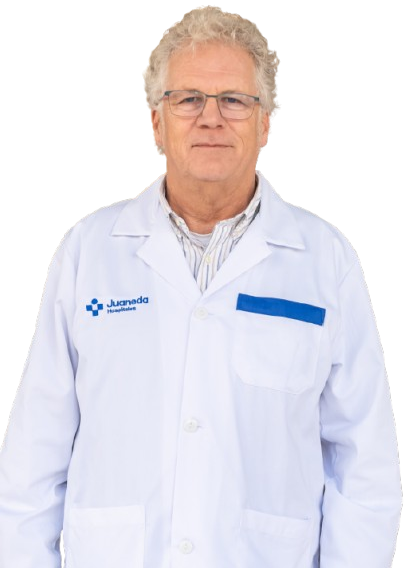
MEDICAL LICENSE NUMBER 070832058
Dr. Friedrich Andreas Nobbe
|
CENTErS |
|
|
LANGUAGES |
|
Solicita ahora mismo tu cita online
o llamando al teléfono +34 971 280 000
Born in Ulm, Germany in 1965. Degree in Philology from the University of Tübingen (History, German Philology). Medical degree from the Universities of Giessen and Freiburg im Breisgau (Germany).
In 1994, completed a doctoral thesis on the topic: “Post-traumatic movement disorders: long-term results of functional stereotactic interventions” (Posttraumatische Bewegungsstörungen - Langzeitergebnisse funktionell-stereotaktischer Eingriffe), University of Freiburg im Breisgau, Germany, awarded cum laude.
Residency in Neurology at the university hospitals of Lübeck (1994–1995), Barcelona (1995–1998), and Aachen (1998–2001).
1995–1998: Feodor Lynen Fellowship from the Alexander von Humboldt Foundation on “Neurophysiological studies and neurophysiologically guided surgery for movement disorders such as Parkinson’s disease” (Neurophysiologische Untersuchungen und neurophysiologisch gesteuerte Operationen bei Bewegungsstörungen wie z.B. Morbus Parkinson). Hospital Clínic Barcelona, with Drs. Tolosa and Valldeoriola.
Resident in Mallorca since 2001. Married, one child.
Languages: German, Spanish, Catalan, fluent English (spoken and written), and spoken French.
Specialist in Neurology at Clínica Juaneda, Palma. Close and direct collaboration with neurosurgeons (Dr. Olabe), interventional radiologists (Dr. Miralbes, Dr. Undgren), and vascular surgeons (Dr. Juliá) for complex neurological pathologies such as brain tumors, disc disorders, and carotid artery ischemia.
Alzheimer’s Disease and Dementia: treatment through Therapeutic Apheresis (AMBAR Clinical Study).
Parkinson’s Disease:
Treatment with Deep Brain Stimulation Neurostimulator implantation Essential tremor Dystonia Treatment of spasticity with intrathecal Baclofen Innovation against Alzheimer’s with the AMBAR treatment. More information.Treatment using deep brain stimulation for Parkinson’s disease, essential tremor, and dystonia. Performed the first implantations guided by deep brain recording in Catalonia, at Hospital Clínic Barcelona.
Performed the first implantations of neurostimulators for the treatment of Parkinson’s disease at Aachen Hospital (Aquisgran), Germany (2001).
Performed the first implantations of intrathecal Baclofen pumps at Clínica Juaneda (2003).
Neurological examination Medical history (collection of current conditions), cranial nerve status, fundus of the eye, eye movements, strength, motor function, sensation, coordination, muscle tone, reflexes, gait, and balance. Memory and orientation.
Memory assessment Neuropsychological tests (e.g., for speech or memory disorders following traumatic brain injury, stroke, etc.). These tests evaluate perception, concentration, memory, and coordination. This method allows assessment of memory, spatial orientation, calculation ability, and executive functions. Psychological testing is performed, for example, to determine whether dementia is present, such as Alzheimer’s disease, and to assess its stage. It also helps detect other impairments of brain function, organic psychiatric syndromes, depression, or neuroses.
Psychopathological diagnosis Many neurological conditions are associated with psychological disturbances and require appropriate treatment. It is estimated that 50% of symptoms reported by patients in a neurological consultation are wholly or partially psychosomatic in nature.
Sleep laboratory Before treating a sleep disorder, it is essential to determine its type and identify any underlying causes. Successful treatment is based on a thorough examination and interview or prior diagnosis. If no diagnosis can be established, an evaluation in the sleep laboratory is recommended.
The first recordings of brain waves (EEG—electroencephalogram) in the 1930s helped expand our understanding of sleep by the late 1980s. EEG analysis allows real-time observation of brain activity, demonstrating that sleep is a dynamic process rather than a state similar to death.
Advances in sleep research are best reflected in the development of sleep laboratories. For sleep analysis, biological signals are recorded:
Brain waves: EEG (electroencephalogram) Eye movements: EOG (electrooculogram) Muscle tone: EMG (electromyogram)Based on these recordings, sleep can be categorized into different phases, reflecting various physiological states. Today, five sleep phases are recognized, present to varying degrees in both healthy individuals and those with sleep disorders.
Additionally, oxygen saturation (pulse oximetry) is measured to diagnose sleep apnea syndrome (SAS) or to assess the effectiveness of a respiratory mask.
Sleep-deprived EEGs can be performed after appropriate deprivation in this clinic’s sleep laboratory, as well as polysomnography. Patients must undergo at least seven hours of sleep deprivation—remaining awake from 2:00 a.m. and arriving at 9:00 a.m. without having slept. Video EEG recordings of up to nine hours can also be performed at this clinic.
If this diagnostic method suggests a structural or respiratory sleep disorder, a full overnight sleep study can be arranged, conducted by the same specialist who performed the ambulatory sleep-deprivation test. This allows for a precise diagnosis and, if necessary, the recommendation of a respiratory mask, whose effectiveness will be tested and adjusted overnight during polysomnography.
Two self-assessment questionnaires will soon be available here to help identify the type and cause of sleep disorders.
Color duplex Doppler ultrasound Ultrasound examination of the neck blood vessels and cerebral arteries (transcranial through the temporal window) allows early detection of stroke risk and visualization of cerebral blood flow. Additionally, transorbital examination can visualize the blood supply to the eye via the ophthalmic artery.
Dr. Friedrich Andreas Nobbe en los medios Ver más
-
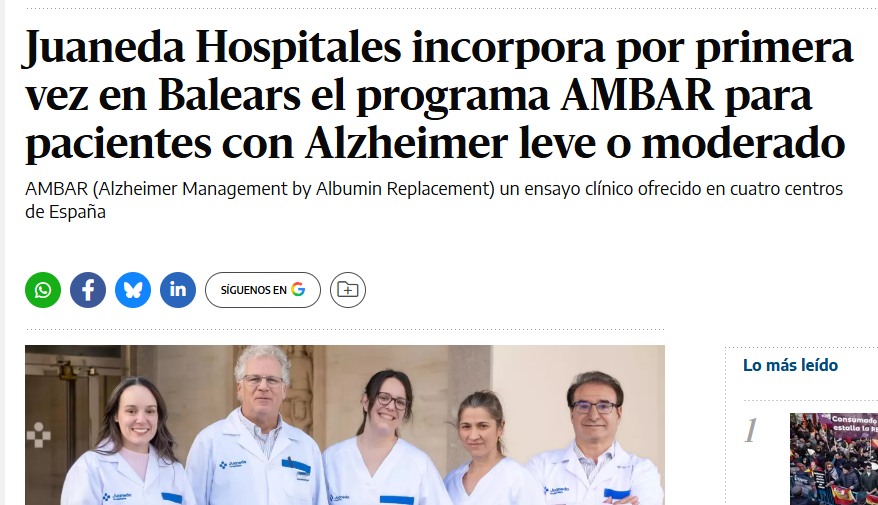
eldiario |27/03/2026
Juaneda Hospitales incorpora por primera vez en...
-
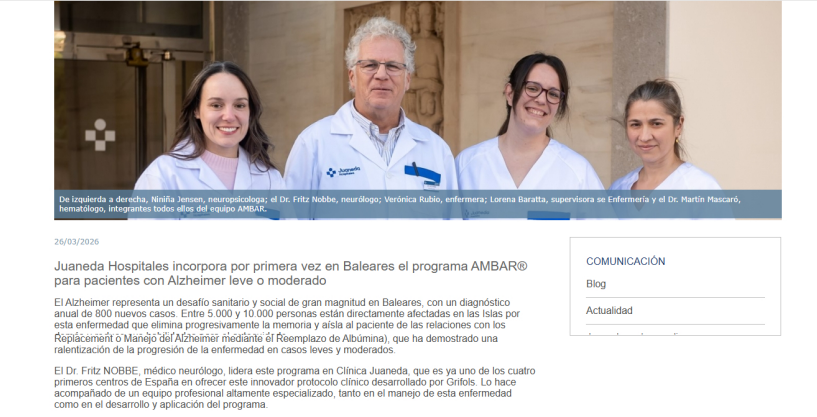
Juaneda |26/03/2026
Juaneda Hospitales incorpora por primera vez en...
-
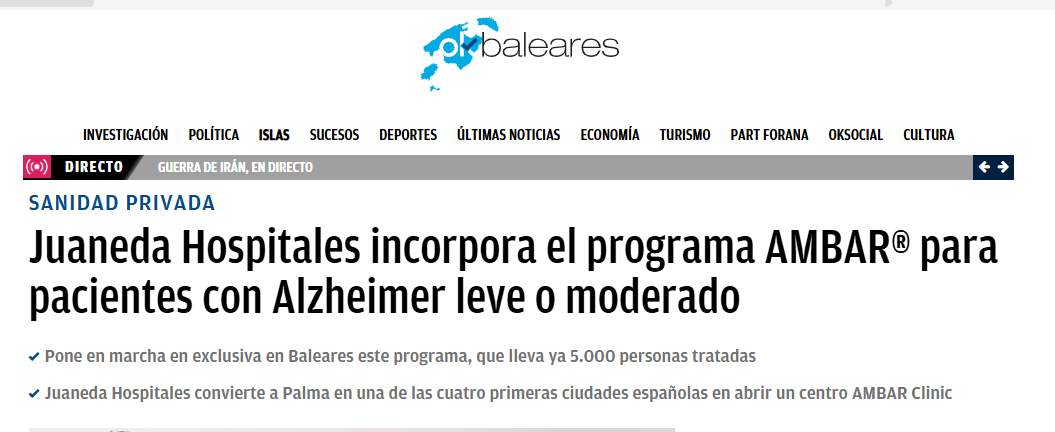
Ok Diario |26/03/2026
Juaneda Hospitales incorpora el programa AMBAR®...
-
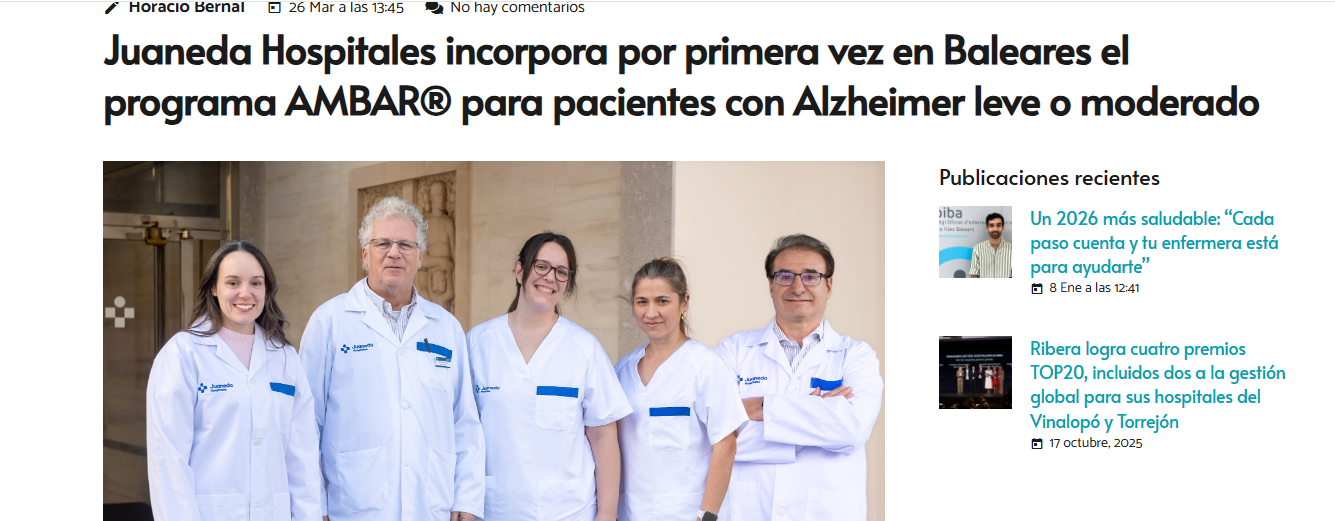
saludediciones |26/03/2026
Juaneda Hospitales incorpora por primera vez en...
-
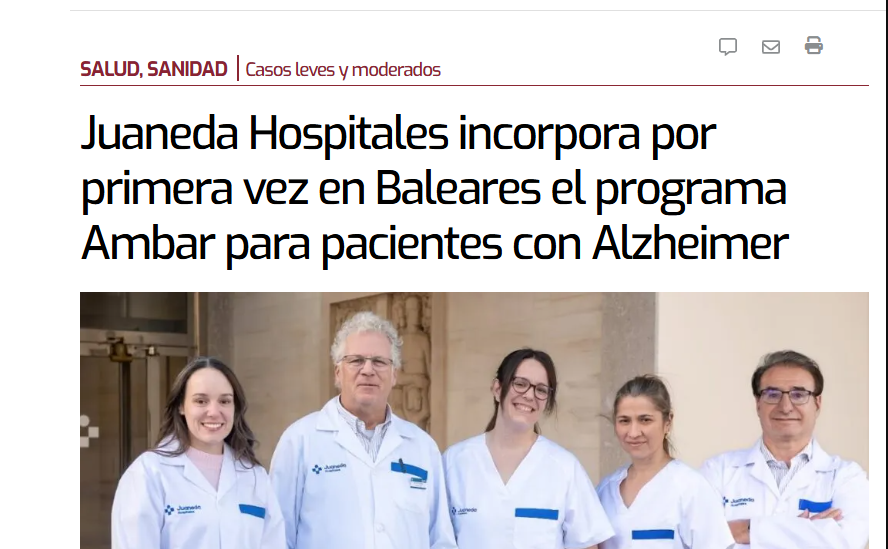
mallorcadiario |26/03/2026
Juaneda Hospitales incorpora por primera vez en...
-
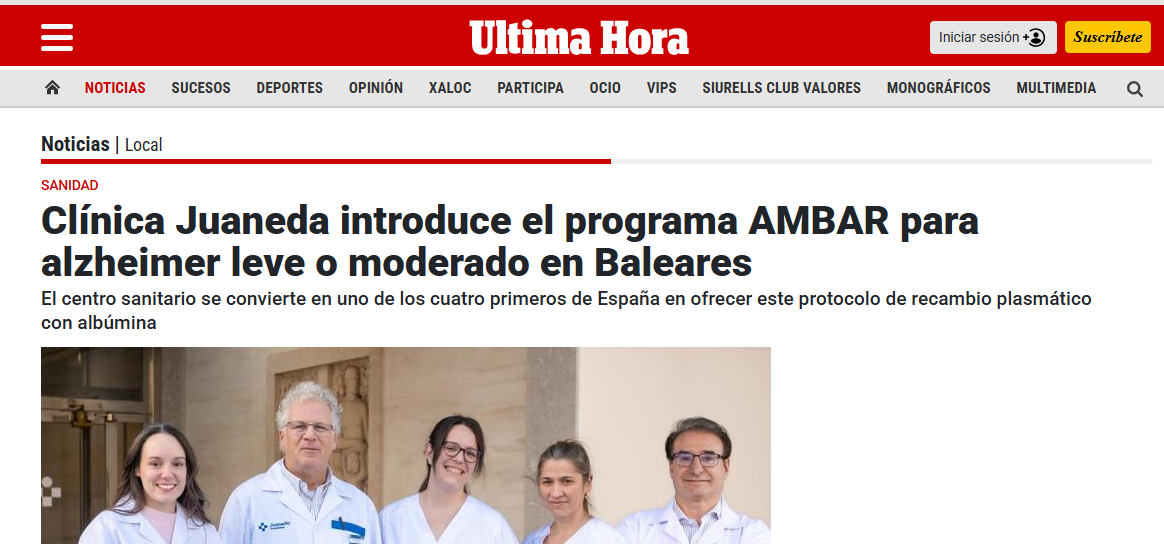
Ultima Hora |26/03/2026
Clínica Juaneda introduce el programa AMBAR para...
-
Saludediciones |11/03/2026
Entrevista al Dr. Friedrich Andreas Nobbe,...
-
IB3 TV |06/01/2016
...


