
How to prevent cervical and cervical cancer beyond the pap smear test
Some 2,000 women died in Spain between 2017 and 2019 from cervical cancer, the most common after breast cancer. And 99% of the cases were caused by the sexually transmitted human papilloma virus (HPV), which is so widespread that before the age of 30, 80% of sexually active people are considered to be carriers.
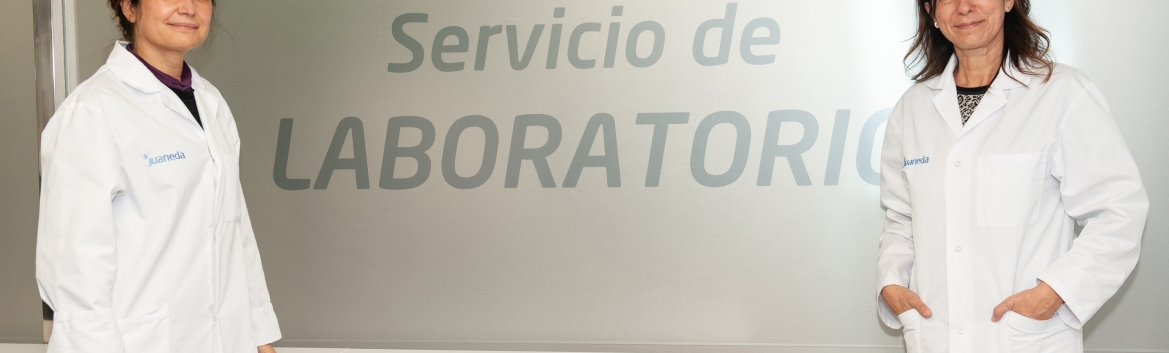
Dr. Pepa Manzano, gynaecologist at Clínica Juaneda, and Dr. Laura García, technical director of the Juaneda Healthcare Network laboratories, offer a new perspective on the infection and the associated disease: Dr. Manzano explains that "cytology should no longer be considered the only screening method for these cancers".
It no longer makes sense to have only one cytology at the annual check-up. Annual check-ups do not have to have a cytology implicit in them. There are very clear new guidelines on HPV screening, diagnosis and follow-up to detect the female population at risk of cervical cancer.
Dr Garcia says that many people associate HPV infection as the consequence of morally wrong behaviour, when what needs to be done is to normalise it. The message is that in young women HPV is not a risk, so it should only be determined after the age of 30, just as talking about 'young people with persistent HPV' is not real, as 90% of people under 30 are 'cleared' of the virus by their immune system.
Science is advancing fast and now allows us to make accurate determinations.
The current approach is that the presence of HPV is so high that young people should be assumed to have it. Some clinical guidelines recommend no cytological screening until the age of 25, and they may even have a lesion (to some degree) and the recommendation is to watch but do nothing. This is because the likelihood of that lesion, at that age, developing into cervical cancer is very low. In 90% of cases, they heal on their own, so the only thing to do is active surveillance, assess the cervix, try not to do biopsies and follow up until the lesion disappears.
It is now known that the boom in HPV infection occurs during the first sexual relations. And this is based on data from Spain, which is one of the countries with a low incidence rate of 80%. This means that out of ten women, eight have, have had or will have HPV. But of those 8, practically 7 will be cured on their own.
In these circumstances, when a woman comes to the gynaecologist's surgery for screening, in addition to taking a cytological sample, it is also a good idea to determine whether she is positive and, above all, what type of virus it is and the level of risk involved.
Dr. Laura García explains that the HPV PCR is very similar to that of SARS-CoV-2, as a fragment of the virus is also detected and amplified. HPV has different genotypes, multiple variants, each associated with different degrees of risk of oncogenicity. Hence the importance of knowing exactly which genotype each patient has. In addition, in the laboratory we see how HPV is increasingly jumping to other areas of the body, so it is no longer just the genital area that needs to be monitored. A screening for uterine cancer is done, but that patient may have HPV in the tonsil or anus and can also be contagious.
From Juaneda Hospitals we encourage patients who come to the clinic to be screened with virus determination, as advised by the Spanish Association of Cervical Pathology and Colposcopy, as cytology only covers between 50 and 70% of diagnoses of cervical cancers and cervix and is no longer sufficient.
Fortunately, we have another test - HPV testing - which is more sensitive. Cytology can provide information that cancer cells are present, so ideally the two tests should be done together.
We must convey to patients that there have been changes and that we should not cling to immobility, that the gynaecological check-up has changed and that, undoubtedly, cytology has had its value, but now there are other, better things.
Juaneda, close to you.
 Share
Share